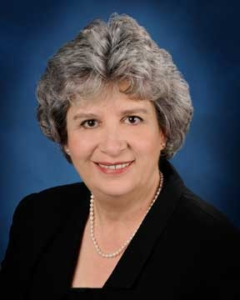

Dr. Carla Garcia, who runs the Thermography Center in Albuquerque recently was interviewed about thermography at her practice.
|
||||
|
Dr. Carla Garcia, who runs the Thermography Center in Albuquerque recently was interviewed about thermography at her practice. Main Category: Breast Cancer Under pressure from doctors, some women’s groups and imaging equipment makers, lawmakers are likely to require coverage for more mammograms in health reform legislation than is currently recommended by the U.S. Preventive Services Task Force, the Wall Street Journal reports. According to the Journal, many doctors’ and patients’ groups in recent years have formed alliances — such as sponsorships, joint events and endorsements — with companies that make mammography equipment. The groups and their corporate partners “swung into action” in November 2009 after USPSTF issued new guidelines suggesting that routine mammograms were not necessary for women in their 40s who have normal cancer risk, the Journal reports. USPSTF said the risks associated with annual mammograms — such as false positives, unnecessary treatment and low-level radiation exposure — could outweigh the benefits for many women in their 40s. The panel recommended that women ages 50 through 74 receive mammograms biennially. The new recommendations “sowed unease and confusion,” including among major medical societies that disagree with USPSTF, the Journal reports. Advocacy groups stepped up lobbying, and their supporters “swamped lawmakers with angry calls and e-mails” urging them to guarantee access to mammograms under health reform legislation, the Journal reports. The House in December 2009 voted 426-0 for a nonbinding resolution — named for Rep. Debbie Wasserman Schultz (D-Fla.), a breast cancer survivor — saying that insurers should not use the USPSTF recommendations to deny coverage for routine mammograms. The Senate adopted a similar amendment by Sen. Barbara Mikulski (D-Md.) to its health reform bill (HR 3590). Congressional aides say that a version of the amendment is likely to be in the final bill. Meanwhile, a few women’s health groups that receive little or no corporate financing are standing behind the USPSTF guidelines. Fran Visco, founder of the National Breast Cancer Coalition, said, “The guidelines were always going to create a firestorm because they threaten some groups’ existence.” Adriane Fugh-Berman, a professor at the Georgetown University School of Medicine, said, “You have to ask if there’s a conflict of interest, because breast cancer advocacy has become big business.” Sen. Chuck Grassley (R-Iowa) last month sent letters to 33 major not-for-profit groups requesting that they disclose their industry funding. The American Cancer Society said that it had received less than $1 million from screening device makers over the past five years, a sum that its spokesperson said is small compared with its more than $1 billion in annual revenue. The money does not influence ACS’ recommendations, the spokesperson added. Nancy Brinker — co-founder of Susan G. Komen for the Cure, which has received money through partnerships with GE — said the organization has always pushed for early detection (Mundy, Wall Street Journal, 1/12). Reprinted with kind permission from http://www.nationalpartnership.org. You can view the entire Daily Women’s Health Policy Report, search the archives, or sign up for email delivery here. The Daily Women’s Health Policy Report is a free service of the National Partnership for Women & Families, published by The Advisory Board Company. © 2009 The Advisory Board Company. All rights reserved. FOX 10’s Laura Sambol introduces us to Digital Thermography, but we do want to let you know, that there are some medical images that may not be for everyone in the family. E. Huff, as staff writer at NaturalNews.com, wrote an interesting article explaining the data behind the new mammogram recommendations. Here’s a quote from the article: “Several years ago, the U.S. Preventive Services Task Force (PSTF) issued an updated set of recommendations about mammogram screenings, suggesting which and how often women should get them. Since the last time the group issued its recommendations in 2002, new study data emerged that has led to a few changes. Its new guidelines, suggesting that women over 40 only need a mammogram every two years, has led to a firestorm of criticism from professional and advocacy groups as well as politicians.” To read this complete article click here. Mammograms & Thermography — Panel’s recommendation has merit. The two techniques look at different things. Thermography looks at abnormal blood vessel formation, which is an early event in the life of a cancer. Mammography looks at masses (1 centimeter or larger) and calcification patterns, which are later developments. Each has reliability in the recent literature of around 88 percent to 96 percent. Each misses tumors picked up by the other (perhaps as many as 10 percent). Mammography cannot visualize tiny tumors with new vessels, which show up on thermography. Conversely, tumors large enough to show up on mammography don’t always have thermographically abnormal vessels. So, each technique is weak where the other is strong. The techniques are complementary. It is not a case of either one or the other. One of the reasons for moving the starting age to 50 for mammograms was the vast number of negative breast biopsies for calcifications. I suspect, in my personal experience, I did 20 benign biopsies for calcification for every cancer we picked up. That is way too many, but abnormal calcifications are pretty common — and frequently benign. Personally, I think the most prudent course for a woman to take is to get a baseline mammogram somewhere between the age of 40 and 50 (unless she has a high-risk family history, in which case earlier is better) to be reasonably sure larger lumps are not seen, and get a baseline thermography to look for early blood-vessel formation. If both are negative, then follow with annual thermography looking for new vessel formation, with mammography every few years to look for solid lumps. Less frequent mammography means less radiation and mechanical pressure. That regimen allows a woman to take advantage of the strengths of each technique without undue risks from radiation or unnecessary biopsy and, it seems to me, to maximize cost-benefit considerations. — Robin A. Bernhoft, M.D., practices medical toxicology in Ojai. The Mammography Debate, Part II Click here to read complete article at Cancer Decisions website. The New England Journal of Medicine published this article entitled “On Mammography – More Agreement Than Disagressment. ” Women Receive “Good News” on Mammography Screening But Is it Really Good News? Women Have A Safe Alternative to Mammograms to Maintain Annual Screenings For immediate release from the American College of Clinical Thermology. Women of all ages received good news with the recent revision of the government recommendations for screening mammography. The US Department of Health and Human Services released their findings and recommendations that screening mammography should now be started at age 50 and performed bi-annually. Up until now, screening was recommended on an annual basis at age 40; this new recommendation has created renewed controversy as doctors have concerns about reducing the number of mammograms that would be clinically justified and indicated.. It takes years for most cancers to develop to the stage that they can be detected with mammogram or ultrasound (dense enough for location and biopsy) so Breast Thermography or Digital Infrared Thermal Imaging (DITI) is ideally placed as an alternative screening tool to identify changes over time in the ‘early’ development stages, before there is more advanced pathology that can be detected with other tests. If changes for the better are to be made, then the recent recommendations of the Preventative Services Task Force will establish the foundation of a more affective screening program which should integrate other types of safe testing. Of the various testing options Breast Thermography or Digital Infrared Thermal Imaging (DITI) offers the most promise for screening the younger age group women. To understand the arguments and issues involved with the new recommendations, we need to understand the difference between ‘screening mammography’ and ‘diagnostic mammography’: Continue reading Women Receive “Good News” on Mammography Screening But Is it Really Good News? Alternative to mammograms In view of the recent U.S. Preventive Services Task Force recommendations concerning new guidelines for having mammograms, some vital information for women needs to be presented. The new guidelines are for the general population, not those at high risk of breast cancer because of family history or gene mutations. It has always been known that mammograms carry a significant risk of causing and spreading breast cancer, although this has largely been ignored by mainstream medicine. They can cause breast cancer through repeated irradiation of the breasts and spread cancer by the fracturing of the fibrous capsule surrounding the tumor through compression of the breasts. A 1999 meta-analysis, “Is Screening for Breast Cancer with Mammography Justifiable?,” was published in The Lancet, the United Kingdom’s premier medical journal, in 2000. It said, “Screening for breast cancer with mammography is unjustified.” This study showed that “for every 1,000 females having mammograms over a 12-year period, the life of one was saved, while the total number of deaths increased by six.” The United States continued to screen with mammography until the new recommendations appeared in the Nov. 17 issue of the Annals of Internal Medicine. Many women are asking themselves, “What should I do now?” The answer is simple: thermography, or digital infrared thermal imaging. This is a true “screening” test that is absolutely 100 percent safe, since it does not require contact with the breasts or use ionizing radiation. It has been approved by the FDA for breast cancer screening since 1982. BreastCancerStories.org is a very special website where breast cancer patients and care givers can write about their experiences, share their progress with loved ones, and read stories and connect with other patients and care givers who are going through a similar experience. Wendy McCoole |
||||
|
|
||||